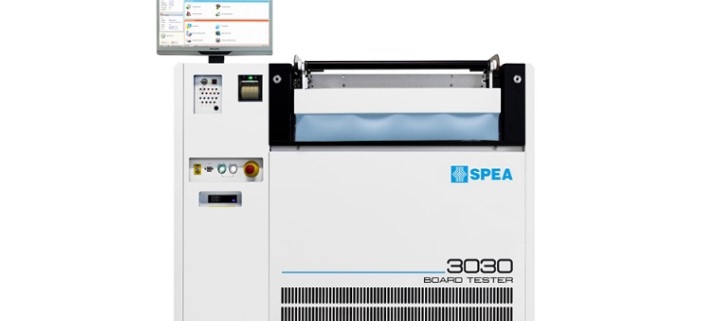
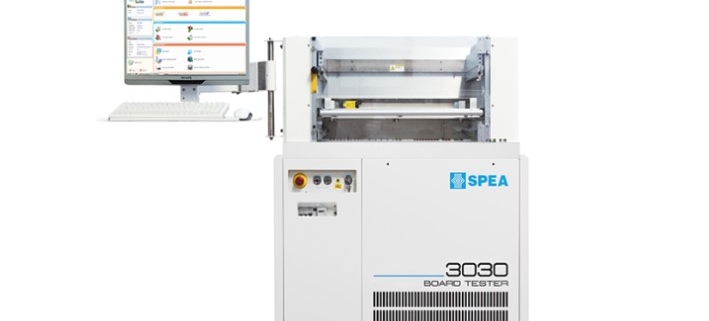
SPEA 3030CE

High throughput. High fault coverage.
Fully compatible with the SPEA 3030 Inline.

Highlights

  1. 2-fold parallel test
  2. Contacting unit compatible with SPEA 3030 Inline
  3. Parametric high-speed ICT
  4. Automatic application development
  5. Diverse test methods

Fully compatible with the SPEA 3030 Inline

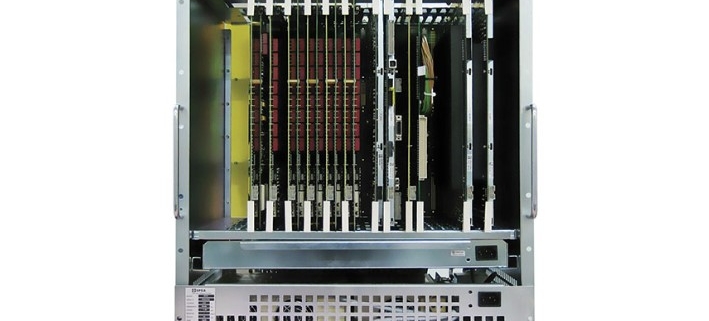
The SPEA 3030 Compact extended is a cost-effective needle bed tester with manual handling that is compatible with the SPEA 3030 Inline. The adapter, pressure unit and test program can be quickly and easily ported from the SPEA 3030 CE to the inline tester – and vice versa. The tester has a modular design, can be configured to customer specifications and, thanks to the dual-core parallel tests, it enables twice the throughput. It offers a wide range of test procedures and test options as well as 100% fault coverage.

Parallel tests

The SPEA 3030 Compact extended can be equipped with up to 2 cores, each with independent CPU, local memory and instrumentation. This allows up to 2 assemblies to be tested in parallel.

Transfer of adapters and test programs to the SPEA 3030 Inline

The contacting and pressure unit and test program are fully compatible with the SPEA 3030 Inline. You can quickly and easily switch your production from a system with manual operation to a fully automatic system and vice versa, depending on your production requirements.

PC-independent architecture

With the PC-independent architecture of the SPEA 3030, the test program runs in the tester’s CPU and the test speed is determined by this. This also ensures that PC background programs do not affect the test speed. In addition, the PC can be updated or replaced at any time without having to debug test programs again.

Parallel flashing of several components

The SPEA 3030CE can be equipped with one or more flashing modules. This allows both identical and different components to be programmed in parallel. Flashing times and costs are significantly reduced.

Precise contacting with receivers from SPEA

The contacting units are integrated directly into the test system. This means that there are no interfering cables between the system modules and the adaptation. Signal integrity is guaranteed. The test system and adaptation are supplied by SPEA as a reliable and cost-effective turnkey test solution.
The assembly is contacted securely and precisely. With the SPEA electromechanical drawer receiver, the contact pressure speed can be adjusted to suit the specific test piece.
The lowering process is always completely planar. The contacting level is freely programmable in steps of 100 µm. This allows different contacting levels to be realized, for example for 2-stage contacting during the function test.

Parametric ICT at maximum speed

The parametric-dynamic high-speed ICT of the SPEA 3030 Inline checks the parameters of each individual component according to the data sheet. These tests are generated automatically with the help of component libraries. This means short program creation times, short test times and maximum error coverage rates.

Testperformance

  • True-Per-Pin Architecture
    SPEA’s direct pin electronics guarantee reliable testing of complex analog or digital assemblies. When not multiplexed, the pin electronics provide a completely independent stimulus and measurement channel on each channel (1:1). This offers several advantages: faster test generation, simple ECO management, full flexibility.
  • Open pin detection
    Two different test techniques are available to clearly identify unsoldered pins (open pins) and other process errors: Electro Scan and Junction Scan.
  • Function test
    The SPEA 3030CE offers function tests not only at the component level, but also at the cluster and board levels. Parameterization is carried out in the Leonardo system software or optionally using higher programming languages such as Microsoft C++, Visual Basic, Borland, Delphi, LabView, etc.
  • Customizable & flexibly retrofittable
    The uncompromising flexibility of our testers ensures individual configuration that optimally meets the respective test requirements. You can either configure your tester completely at the time of purchase or retrofit it gradually—anything is possible. Third-party measuring instruments can also be easily integrated. The wide range of adaptation options, such as drawer receivers and plug interfaces, are outstanding. Inline contacting unit, Pylon interface but also customer-specific interfaces or receivers from third-party suppliers (Genrad, Ingun, Zentel, etc.).
  • Boundary scan
    Boundary scan is used when physical access to individual circuit components is not possible. This means that highly complex assemblies, fine-pitch technology, multilayers and BGAs can be tested without direct contact with the test probes. The parallel use of boundary scan technology and the system modules of the SPEA 3030 Compact Extended enables broader fault coverage while simultaneously reducing adapter costs (virtual test points instead of real test needles).
Other testing systems ->

Learn more >

SPEA 3030 Compact

SPEA 3030 Compact – Kleine Standfläche, hohe Fehlerabdeckung

Highlights

  1. 2-fold parallel test
  2. Low space requirement
  3. Parametric high-speed ICT
  4. Automatic application development
  5. Wide range of test methods: ICT, FKT, flashing

Compact. Powerful.

The SPEA 3030 Compact is designed for fast and cost-effective in-circuit testing. With a small footprint, it offers maximum testing possibilities. The tester has a modular design, can be configured to customer specifications and, thanks to the dual-core parallel tests, it enables twice the throughput of conventional ICT testers with 100% fault coverage.

Parallel tests

The SPEA 3030 Compact can be configured as a multi-core system with up to 2 independent cores – each with independent CPU, local memory and instrumentation.

Reduce testing costs

The multi-core architecture drastically reduces testing costs. You only need one tester, one handling procedure, one adapter and one PC to test two assemblies simultaneously.

PC-independent architecture

With the PC-independent architecture of the SPEA 3030, the test program runs in the tester’s CPU and the test speed is determined by this. This also ensures that PC background programs do not affect the test speed. In addition, the PC can be updated or replaced at any time without having to debug test programs again.

Reduction of field returns

Reduction of field returns – The SPEA 3030 Compact was developed to help electronics manufacturers ensure the quality of their products. By using innovative test techniques, the SPEA 3030 Compact reliably finds faults that cannot be detected by conventional ICT testers.

Parallel flashing of several components

The SPEA 3030 Compact can be equipped with one or more flashing modules. This allows both identical and different components to be programmed in parallel. Flashing times and costs are significantly reduced.

Precise contacting with receivers from SPEA

The contacting units are integrated directly into the test system. This means that there are no interfering cables between the system modules and the adaptation. Signal integrity is guaranteed. The test system and adaptation are supplied by SPEA as a reliable and cost-effective turnkey test solution.
The assembly is contacted securely and precisely. With the SPEA electromechanical drawer receiver, the contact pressure speed can be adjusted to suit the specific test piece.
The lowering process is always completely planar. The contacting level is freely programmable in steps of 100 µm. This allows different contacting levels to be realized, for example for 2-stage contacting during the function test.

Parametric ICT at maximum speed

The parametric-dynamic high-speed ICT of the SPEA 3030 Compact checks the parameters of each individual component according to the data sheet. These tests are generated automatically with the help of component libraries. This means short program creation times, short test times and maximum error coverage rates.

Test performance of the SPEA 3030 Compact

  • True-Per-Pin Architecture
    SPEA’s direct pin electronics guarantee reliable testing of complex analog or digital assemblies. When not multiplexed, the pin electronics provide a completely independent stimulus and measurement channel on each channel (1:1). This offers several advantages: faster test generation, simple ECO management, full flexibility.
  • Open pin detection
    Two different test techniques are available to clearly identify unsoldered pins (open pins) and other process errors: Electro Scan and Junction Scan.
  • Function test
    The SPEA 3030 Compact offers function tests not only at the component level, but also at the cluster and board levels. Parameterization is carried out in the Leonardo system software or optionally using higher programming languages such as Microsoft C++, Visual Basic, Borland, Delphi, LabView, etc.
  • Customizable & flexibly retrofittable
    The uncompromising flexibility of our testers ensures individual configuration that optimally meets the respective test requirements. You can either configure your tester completely when you buy it or upgrade it gradually – anything is possible. Third-party measuring instruments can also be easily integrated.
    The wide range of adaptation options is outstanding, including drawer receivers, plug interfaces, inline contact units, pylon interfaces, as well as customer-specific interfaces or receivers from third-party providers (Genrad, Ingun, Zentel, etc.).
  • Boundary scan
    Boundary scan is used when physical access to individual circuit components is not possible. This means that highly complex assemblies, fine-pitch technology, multilayers and BGAs can be tested without direct contact with the test probes. The parallel use of boundary scan technology and the system modules of the SPEA 3030 Compact enables broader fault coverage while reducing adapter costs (virtual test points instead of real test probes).
    Transfer of test programs and adapters to other testers
    SPEA testers are based on a common system architecture. The hardware and software platform is designed so that test programs and adapters can be transferred from one system to another. For the test programs, this applies not only within the SPEA 3030 system family, but also between board and flying probe testers. This enables the greatest possible flexibility in production.

Autres systèmes de test ->

Learn more >

SPEA 3030R

SPEA 3030R In-Circuit Tester – maximum test performance without additional space requirements

The SPEA 3030R In-Circuit Tester is a powerful test system that combines maximum precision with a space-saving design. As a rack version of the successful SPEA 3030 series, it offers multifunctional testing capabilities and can be seamlessly integrated into existing production cells and automation systems. The tester thus enables maximum efficiency in a minimum of space.

Space-saving design with full testing performance

The SPEA 3030R in-circuit tester reduces the space required for production to zero. The system can be installed directly in a 19″ housing or integrated into existing third-party systems via a plug-in interface. This design not only saves valuable space, but also reduces costs, as existing mechanical structures and frames can be used.

Multifunctional test platform for maximum accuracy

The SPEA 3030R in-circuit tester offers an impressive range of test techniques, all combined in a compact test station. It supports:

  • In-circuit tests (analog, digital, mixed)
  • Power-up tests
  • functional tests
  • Flashing via embedded programming
  • Open-Pin-Scan
  • Boundary Scan
  • Built-In-Self-Test
  • Parametrische Tests

With this variety of test methods, the tester offers complete fault coverage—from production faults to complex electrical faults.

PC-independent architecture for stable test results

Like all systems in the 3030 series, the SPEA 3030R in-circuit tester has its own CPU. The test program runs directly on the tester, which means that external PC processes do not affect the test speed. This ensures stable and reproducible results. In addition, the PC can be replaced or updated at any time without the need for re-debugging.

Powerful, reliable, and easy to use

Thanks to the powerful Leonardo system software, the SPEA 3030R in-circuit tester is easy to use. Functions such as auto-debug and auto-tuning accelerate test development and increase measurement stability. This allows test programs to be generated quickly and production downtime to be avoided.

Ideal for modern production environments

The SPEA 3030R in-circuit tester offers all the advantages of the SPEA 3030 family—high measurement accuracy, modular architecture, and unlimited flexibility—in a compact space. Its integration into existing systems ensures maximum signal integrity and reduces signal loss. This makes it the perfect solution for manufacturers who value efficiency, precision, and cost savings.

Other testing systems ->

Learn more >

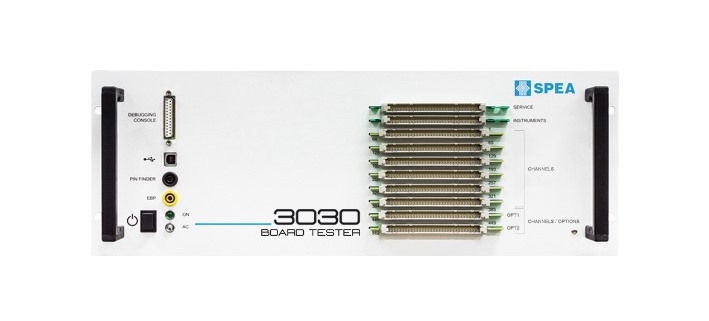
SPEA 3030BT

SPEA 3030BT – Testing has never been easier

SPEA 3030BT In-Circuit Tester – compact, precise, powerful

The SPEA 3030BT In-Circuit Tester is a compact and cost-effective tester for precise electronics testing. Despite its small footprint, it offers the full performance of the SPEA 3030 series. With modern technology, simple operation, and flexible integration, the tester is the ideal solution for manufacturing environments with limited space and high quality requirements.

Simple testing with maximum efficiency

Testing has never been easier than with the SPEA 3030BT in-circuit tester. The user-friendly Leonardo system software enables automatic test program creation and fast debugging. In just a few steps, the software guides the user from data import to a stable test program. The system can be connected to a PC or notebook via USB and used immediately—uncomplicated, efficient, and reliable.

High testing performance in the smallest of spaces

The SPEA 3030BT in-circuit tester requires minimal space and can be used both as a benchtop device and in a standard 19″ rack. Its ergonomic design with front handles facilitates transport and makes it the perfect solution for flexible production environments. Despite its compact size, the tester operates with the same powerful hardware modules as larger systems in the SPEA 3030 series.

PC-independent architecture for stable performance

The internal CPU of the 3030BT in-circuit tester ensures that the test program runs independently of the PC. This keeps the test speed constant—even if the connected computer is executing other processes or is replaced. This architecture increases operational reliability and minimizes downtime in the production process.

Reliable error detection and test coverage

The SPEA 3030BT in-circuit tester offers comprehensive testing capabilities, including:

  • In-circuit testing for short circuits, open pins, and faulty components
  • Open pin detection through Electro Scan and Junction Scan
  • True per-pin architecture with 1:1 independent measurement channels
  • 16-bit instrumentation and 8-wire measurements for maximum accuracy

These technologies enable precise identification of process errors that are often overlooked by conventional ICT testers.

Modularity and future-proofing

Thanks to its modular architecture, the SPEA 3030BT in-circuit tester can be flexibly adapted to individual requirements. Manufacturers benefit from a durable test solution that can be easily expanded and modernized—an investment that pays off in the long term.

Other test systems ->

Learn more >

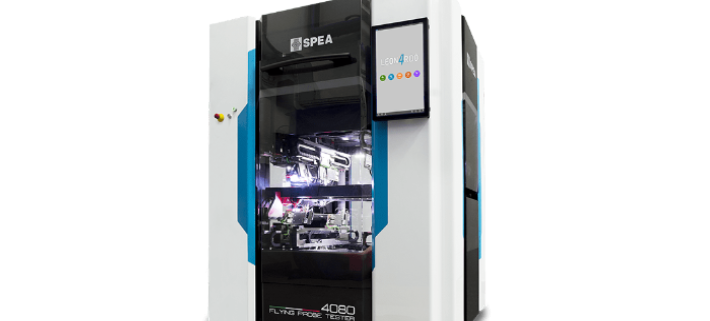
SPEA 4080X Flying Probe Tester

SPEA 4080 Flying Probe Tester – Contacting the smallest geometries
Ideal for high-volume production & more

The SPEA 4080 sets new standards in the flying probe sector.
It offers outstanding testing capabilities and throughput comparable to that of a needle bed tester.

Highlights

  1. 180 contacts/sec.
  2. Min. Pad size: 50 μm
  3. 8 multi-tool flying probe test heads
  4. Contacting on both sides
  5. Highest error coverage
  6. Innovatives Fahrgestell aus Granit
  7. Compact footprint: 2.2 sqm (23.14 ft2)
  8. App-based system software
  9. Manual loading + inline integration in one system

180 contacts/sec.

Unique drive technology with linear motors and optical encoders on all axes (X, Y and Z) guarantees maximum acceleration and extremely precise contacting. The closed-loop technology guarantees unrivaled repeat accuracy over an infinite number of travels.

Min. Pad size: 30 µm

The extremely precise contacting accuracy is achieved by linear optical encoders on all axes. The SPEA 4080 contacts 50μm pads at maximum speed and with absolute precision, without leaving any traces – unique in the flying probe sector.
The programmable contact force and soft landing function ensure that even the most sensitive electronic components (ultra-fine pitch, sticky boards during product start-up, flex assemblies) are contacted precisely and quickly without risk of damage.

Highest error coverage

The SPEA 4080 offers the complete range of test options with maximum measuring accuracy. The shorter the distance between the needle and the measuring instrument, the faster and more accurate the measurement performed. Therefore, in SPEA Flying Probe systems, the measuring and stimulation instruments are positioned as a test head directly on the needles – the “flying tester concept”. That’s why SPEA testers are the fastest and the most accurate.

Innovatives Fahrgestell aus Granit

An innovative granite chassis, combined with state-of-the-art linear motor technology, offers unparalleled contact precision with extremely fast test speeds, low vibration, and maximum thermal stability.
Compared to conventional iron or steel, natural granite offers the best damping properties and thermal stability, minimizing vibrations and deformation effects that would compromise accuracy and reliability over time.

Compact footprint: 2.2 sqm (23.14 ft2)

The footprint of the SPEA 4080 is very compact: it only requires 2.2 square meters including the inline feed.

Can replace needle bed tester

Due to its speed and the associated high productivity, the SPEA 4080 can easily be used where previously only needle bed testers were used, for example in high-volume series production.

High precision measurements

  • High-precision measurement performance and accuracy (0.1pF)
  • Signal integrity
  • No impairment of the measurement results or interference
  • Immediate signal acquisition
  • Unique repeatability

Up to 28 Top & Bottom Flying Test Tools

The eight axes of the SPEA 4080 (4 top + 4 bottom) allow the installation of up to 28 flying tools in total: In addition to the probes with which all electrical tests are performed, a variety of other tools are available to extend the test performance of the SPEA 4080.

Learn more >

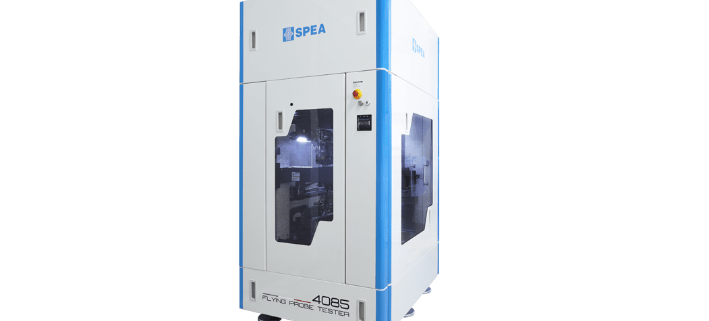
SPEA 4085 Flying Probe Tester

SPEA 4085 Flying Probe Tester – Powerful and compact.
Full test coverage for 5G components.

The world’s most compact 8-fold flying probe tester

The SPEA 4085 is the most powerful and at the same time most compact 8-fold flying probe tester on the market. Its peak throughput of over 800,000 tested assemblies per year makes it ideal for high-volume series production. Highest positioning and repeat accuracy of 20 and 5 μm respectively guarantee reliable testing of assemblies with the highest packing density, micro pads smaller than 50 µm and 01005 SMD – typical for the latest generation of electronics such as smartphones, tablets, laptops, routers, wearables and sensors. But 008004 components are also reliably contacted and tested. The SPEA 4085 achieves all this with a footprint of just 1.29 square meters.

Full test coverage for 5G components

The wide range of test procedures available on the SPEA 4085 includes the RF test – also for 5G devices – and an optical test using high-resolution cameras with liquid lenses. But the standard in-circuit test, short-circuit test, open pin scan, power-on test, function test, boundary scan, flash programming, thermal inspection and LED test for color location and saturation are also part of the test program. This ensures complete test coverage and the identification of any component defects.

Highlights

  1. Compact design
  2. Modern test technology on 1.29 square meters
  3. HF test for 5G technologies
  4. Testing of high-frequency components on printed circuit boards
  5. Unprecedented throughput
  6. More than 800,000 assemblies tested per year
  7. Ultra precise contacting
  8. Guaranteed even on 008004 components
  9. Soft-touch technology
  10. Damage caused by contacting is excluded

Learn more >

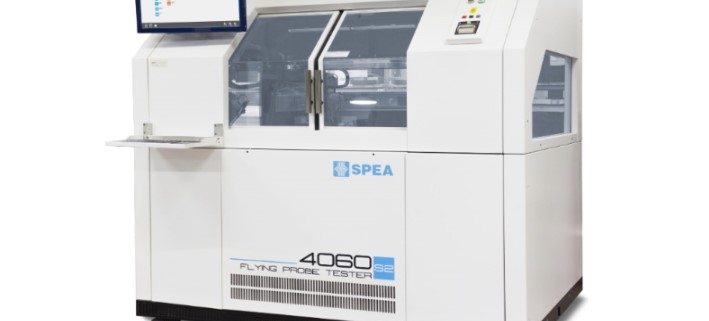
SPEA 4060 Flying Probe Tester

SPEA 4060 Flying Probe Tester – Test the largest boards
Multifunctional double-sided contacting


Two-sided multi-mode test: optimal accessibility & parallel tests

The SPEA 4060 Flying Probe Tester combines the advantages of a double-sided flying probe system with the option of using additional tools such as fixed probes, pressure and support tools, multi-probe units, and more.

Double-sided FLYING PROBE TEST.
Four freely movable test heads on the top side and two on the bottom side enable the SPEA 4060 to test the assembly simultaneously from the top and bottom sides. This increases test coverage and throughput.

  • Shortened test time
  • Increased fault coverage
  • A single test program for both sides of the board

Test even the largest boards

LARGE TEST AREA: The large test area allows the SPEA 4060 S2 to test boards up to 1524 x 610 mm (60 × 24″) in size.
BACKPLANES: The SPEA 4060 S2 easily tests backplanes with a wide variety of connectors.
TALL COMPONENTS: The SPEA 4060 S2 also tests PCBs with transformers, heat sinks, connectors, front panels, polarized capacitors, and other components with a height of up to 110 mm.

High precision measurements

  • High-precision measurement performance and accuracy (0.1pF)
  • Signal integrity
  • No impairment of the measurement results or interference
  • Immediate signal acquisition

Fast and precise testing of even the smallest components

  • ULTRA HIGH-SPEED AXLES
  • High-performance linear motors
  • PRECISE contacting of micro-pads
  • ULTRA-FAST SOFT-TOUCH TECHNOLOGY

Learn more >

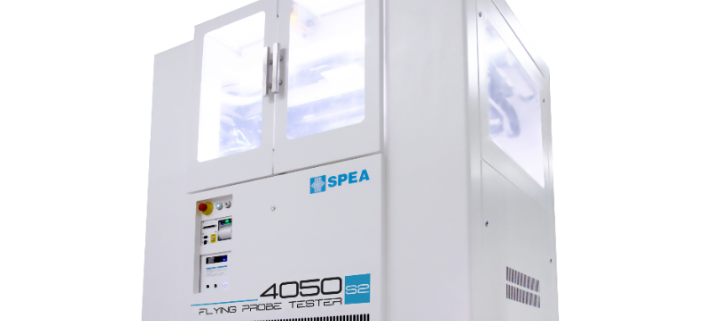
SPEA 4050 Flying Probe Tester

High productivity with maximum accuracy
SPEA 4050 Flying Probe Tester – Ideal for medium-volume production

Highlights of the SPEA 4050 Flying Probe Tester

  1. High throughput
  2. High precision measurements
  3. Precise contacting of Micro-SMD
  4. No adapter costs
  5. Intuitive programming
  6. Highest error coverage
  7. Reduction of field returns

Multi-mode contacting

With the SPEA 4050, the 4 flying test heads on the top can be combined with additional test tools on the bottom. This increases test depth and throughput.
Each of the test probes can be used for an in-circuit test, a power-on test, as an analog sink/source, as a digital driver/sensor, for flashing using on-board programming, boundary scan, and can be used as a divider.
The four needles at the top can be used for a standard flying probe test, while the lower platform can be used to accommodate additional fixed probes and adapters, various power supplies, digital I/O signals, and support fingers. The 4 test needles from above can also be equipped with additional test tools.

Precise contacting of Micro-SMD

The miniaturization of components continues to advance – SPEA flying probe testers are equipped to handle it.
High-performance linear motors on all axes (X, Y, Z)
Precise contacting of micro-SMD (008004)
Reliable testing of flexible/thin assemblies
Sticky boards during product ramp-up
Unique repeatability even with the smallest components over a long period of time
Ultra-fast soft-touch technology: no damage from contacting, no stress or strain on the assembly and components

High-precision measurements with the SPEA 4050 Flying Probe Tester

  • High-precision measurement performance and accuracy (0.1pF)
  • Signal integrity
  • No impairment of the measurement results or interference
  • Immediate signal acquisition

High test speed

  • High-performance linear motors on all axes (X, Y, Z)
  • Maximum speed for all movements
  • Maintenance-free: No impairment of accuracy due to wear and tear
  • Extreme long-term stability and durability

Learn more >

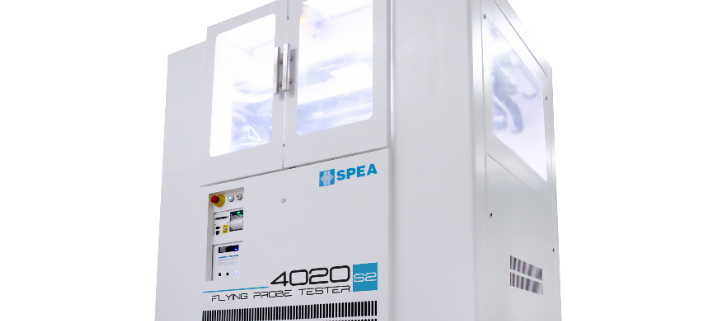
SPEA 4020

SPEA 4020 – Top performance at an unbeatable price.
Ideal for prototypes, NPI, small series, and more.

Highlights of the SPEA 4020

  1. High precision measurements
  2. Precise contacting of Micro-SMD
  3. No adapter costs
  4. Intuitive programming
  5. Highest error coverage
  6. Reduction of field returns

Multi-mode contacting with the SPEA 4020

With the SPEA 4050, the 4 flying test heads on the top can be combined with additional test tools on the bottom. This increases test depth and throughput.
Each of the test probes can be used for an in-circuit test, a power-on test, as an analog sink/source, as a digital driver/sensor, for flashing using on-board programming, boundary scan, and can be used as a divider.
The four needles at the top can be used for a standard flying probe test, while the lower platform can be used to accommodate additional fixed probes and adapters, various power supplies, digital I/O signals, and support fingers. The 4 test needles from above can also be equipped with additional test tools.

Precise contacting of Micro-SMD

The miniaturization of components continues to advance – SPEA flying probe testers are equipped to handle it.
High-performance linear motors on all axes (X, Y, Z)
Precise contacting of micro-SMD (008004)
Reliable testing of flexible/thin assemblies
Sticky boards during product start-up
Unique repeatability even with the smallest components over a long period of time
Ultra-fast soft-touch technology: No damage from contacting, no stress or strain on the assembly and components

High precision measurements

  • High-precision measurement performance and accuracy (0.1pF)
  • Signal integrity
  • No impairment of the measurement results or interference
  • Immediate signal acquisition

High test speed

  • High-performance linear motors on all axes (X, Y, Z)
  • Maximum speed for all movements
  • Maintenance-free: No impairment of accuracy due to wear and tear
  • Extreme long-term stability and durability

Learn more >